A Vermont publication about clean power, surveyed lot by lot: the 100 percent renewable standard now written into state law, the farm methane and Quebec hydro behind it, and the home batteries and ski-slope turbines at its edges. Everything here lands, sooner or later, on a line item in your power bill.
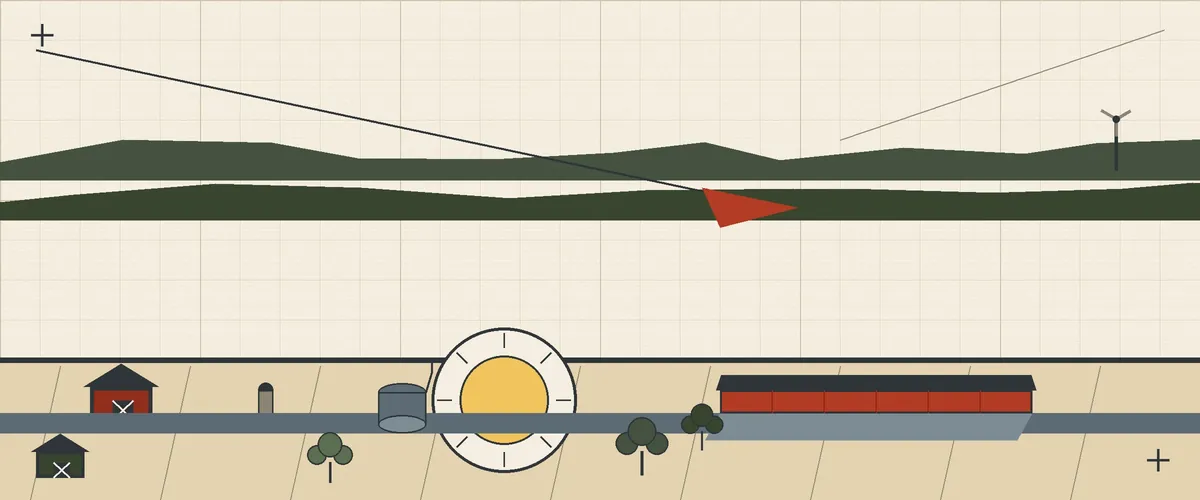
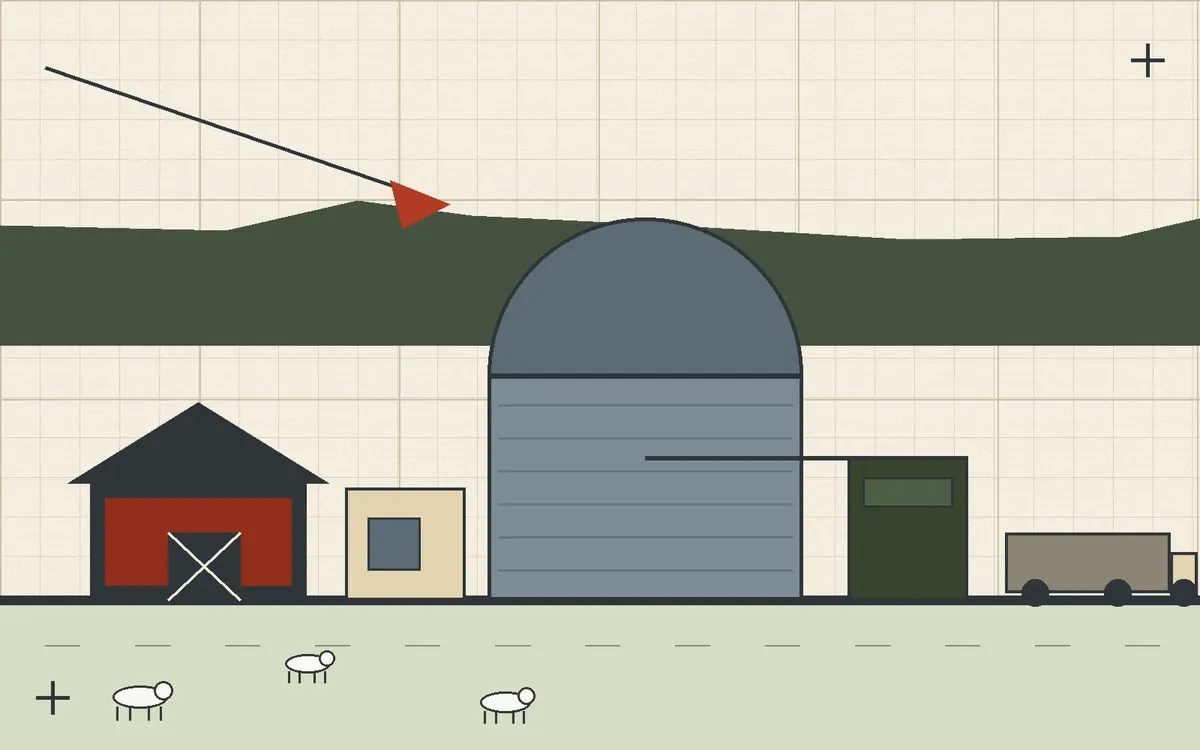
The plat we work from: one village green, a barn, a bridge, a digester, and a ridge-line turbine. Vermont's clean power story is smaller and closer to home than the national version.
02
Lot 02 · Stories
Short takes from around the state
SEP 26, 2026
Mud season tests the last mile
Frost heaves and soft shoulders do as much damage to Vermont's distribution grid as any summer storm. Crews stage through the thaw weeks, when pole guy wires loosen and dirt-road culverts wash out. Most outages stay short, but the season is a reminder that the last mile of wire here is rural, old, and worth the maintenance money.
ROADS AND WIRES
SEP 23, 2026
A turbine above the Vista Quad
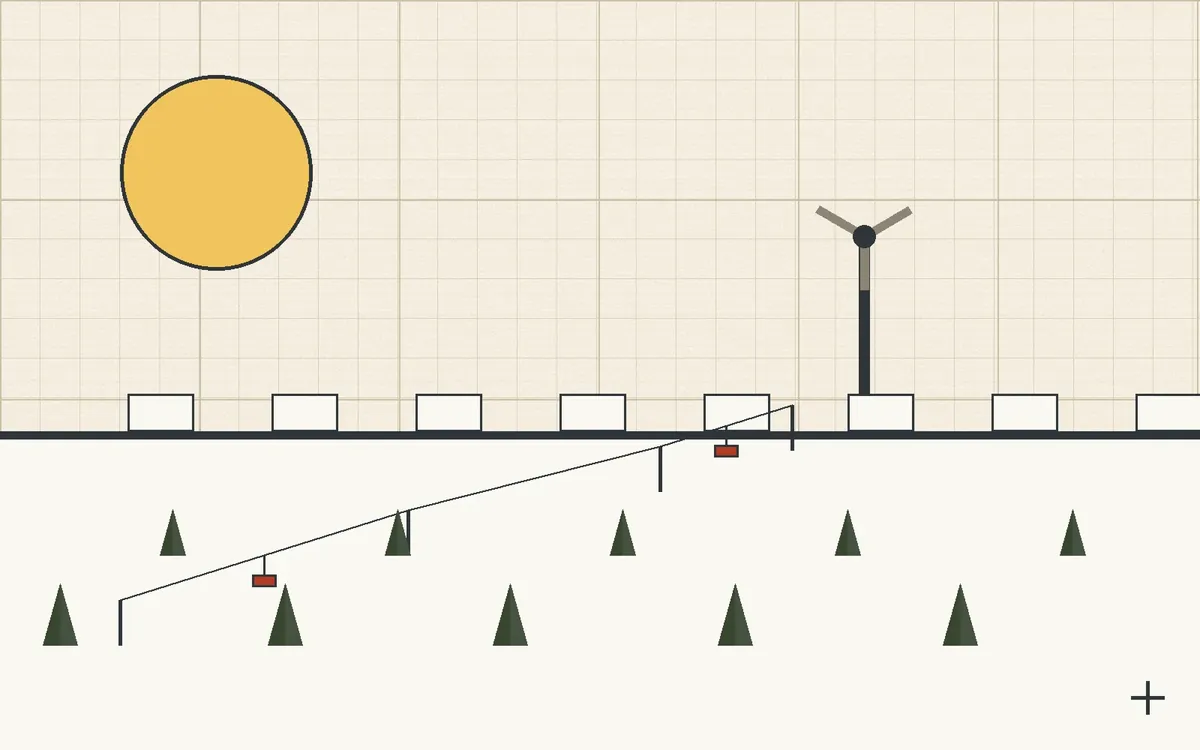
Bolton Valley has run a 100-kilowatt turbine near its summit since 2009, roughly 300,000 kilowatt-hours a year by the resort's own figure. That is a rounding error on the state grid, but it makes the ski area one of the few in New England that generates a share of what it uses.
RIDGELINE
SEP 19, 2026
The $55-a-month grid asset
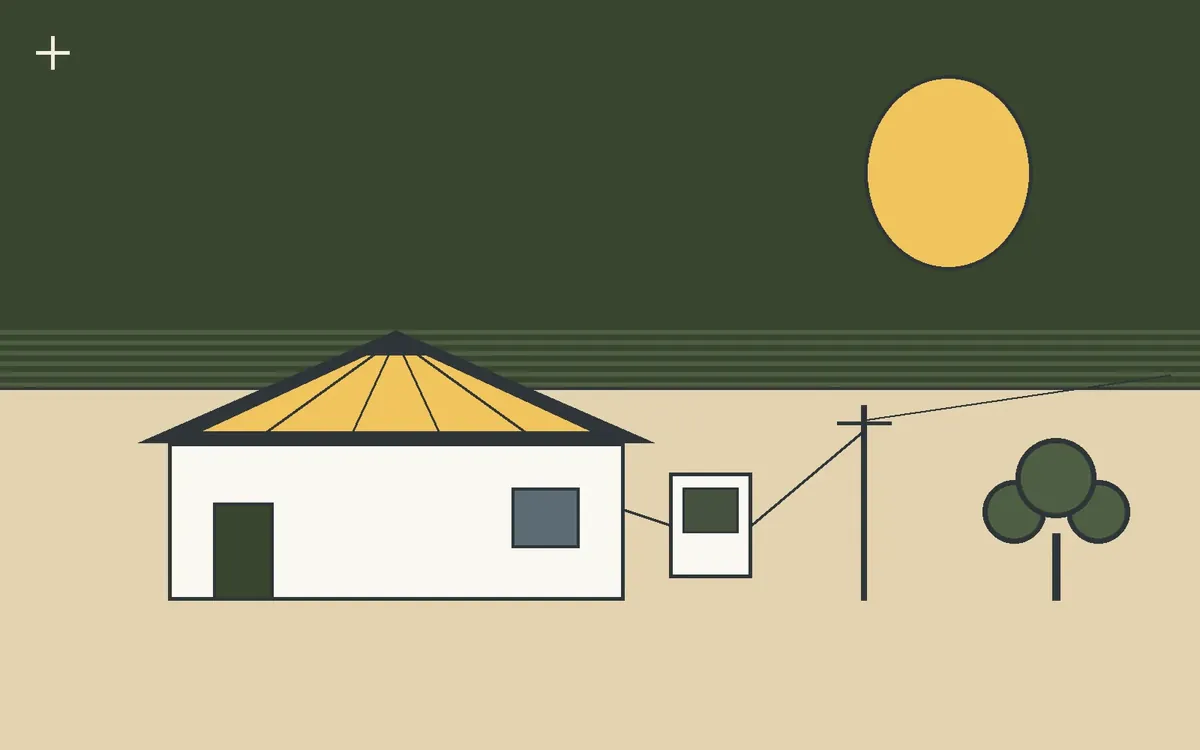
Green Mountain Power's home battery lease, about $55 a month for a Powerwall, turns customer basements into dispatchable grid capacity. State regulators lifted the program's enrollment caps in 2023 after repeated storm seasons. Vermont now has one of the densest clusters of home batteries in the country.
HOME BATTERIES
SEP 15, 2026
Burlington's quiet 100 percent
The Burlington Electric Department reports that renewable sources covered more than all of its 2024 load. It is a municipal utility with a wood, hydro, wind, and solar portfolio built over decades, and the claim is about annual energy, not every hour of the year. Still, for a city of about 45,000 meters, it is the oldest working proof in the state that the target is reachable.
MUNICIPAL POWER
03
Lot 03 · Top story
This week's long read
The digester at Goodrich Farm in Salisbury, drawn as the working end of Vermont's renewable standard: manure and food waste in, pipeline gas out.
The 100 percent question runs through a barn in Salisbury
BY THE CLEAN ENERGY VERMONT EDITORS · FILED SEPTEMBER 27, 2026 · 8 MIN READ
Vermont now has a law that requires every electric utility in the state to sell renewable power, 100 percent of it, between 2030 and 2035 depending on the utility. The cleanest way to understand what that means is to drive to a dairy farm in Addison County and look at the tank behind the barn.
The state's clean-power math no longer lives only in Quebec dams and rooftop arrays. Some of it lives in a covered lagoon.
The Goodrich Farm digester, commissioned in the summer of 2021, turns manure from a herd of roughly 900 cows plus trucked-in food waste into renewable natural gas, on the order of 140,000 Mcf a year at the developer's last public figure. Middlebury College buys most of the output. The full story covers the law, the farm, and the bill line where it all lands.
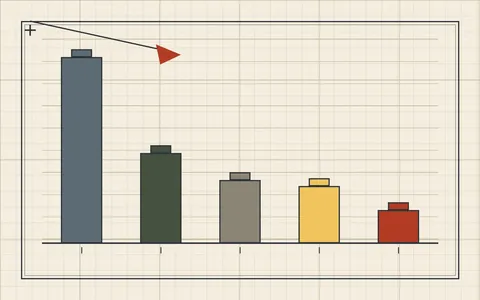
Illustrative proportions, not data: Vermont's supply picture is dominated by hydro and imported electricity, with biomass, methane, wind, and solar making up smaller slices, and everything else a sliver.
HYDRO AND IMPORTS The tall bar. Hydro-Quebec contracts and in-state hydro do much of the quiet work; Vermont utilities lean on them hardest in winter.
BIOMASS AND METHANE Wood, landfill gas, and a small number of farm digesters. Small in megawatts, but the digesters pay farms for waste they would otherwise manage at a cost.
WIND Ridgeline machines in the Northeast Kingdom and on a few ski summits. Vermont's wind resource is real but sparsely built out.
SOLAR Rooftops, net-metered fields, and a growing share of paired batteries. The standard's load-growth tier is designed to pull more of this in state.
05
Lot 05 · How we work
How we work
The rules we follow
Primary documents first: Public Utility Commission orders, enrolled bills, grid operator statistics, and the project pages of the companies doing the work.
Every number is dated and attributed. Anything illustrative is labeled as such, like the figure above.
We draw our own illustrations. Captions describe the subject and why it matters, never the making of the picture.
Vermont runs on town-meeting skepticism. When the honest answer is that a cost or a date is uncertain, we say so and explain what it depends on.
Vermont is the smallest state in the six-state New England grid, and its energy story is unusually local: a municipal utility in Burlington, a co-op in the islands, a gas utility that buys from a dairy herd, a college heated by cow power. This publication maps that territory one lot at a time.